Why most Шумоизоляция помещений projects fail (and how yours won't)
The $3,000 Mistake That Still Lets You Hear Your Neighbor's TV
Picture this: You've just spent thousands on soundproofing your home office. The contractor assured you the job was done right. But two weeks later, you're still hearing every word of your neighbor's phone conversations through the wall.
Sound familiar? You're not alone. About 68% of soundproofing projects fail to meet expectations, leaving frustrated homeowners stuck with half-measures and empty wallets.
Here's the kicker—most of these failures have nothing to do with cheap materials or lazy contractors. The real culprit? A fundamental misunderstanding of how sound actually works.
The Three Fatal Mistakes Everyone Makes
Treating Symptoms Instead of Sources
Walk into any hardware store and someone will sell you acoustic foam panels. They look professional. They feel substantial. And they'll do absolutely nothing for the traffic noise coming through your windows.
Acoustic foam treats echo and reverberation inside a room. It doesn't block sound from entering or leaving. That requires mass, density, and strategic decoupling—concepts that don't fit on a flashy product display.
I've seen people spend $800 on foam panels when their actual problem was a 2mm gap under the door. That gap alone can reduce your soundproofing effectiveness by 30%.
Ignoring the Flanking Paths
You build a fortress of a wall—double drywall, mass-loaded vinyl, resilient channels, the works. But sound doesn't care about your wall. It travels through the floor joists, the ceiling cavity, the electrical outlets, the HVAC ducts.
Sound is like water. It finds every crack, every gap, every weak point. Block the obvious path and it simply takes the scenic route through your building's structure.
The "More is Better" Trap
Doubling up on drywall without an air gap? Congratulations, you've just created an expensive single layer. The two sheets vibrate together as one, giving you maybe 2-3 dB of improvement instead of the 10-15 dB you expected.
Real soundproofing follows the mass-spring-mass principle. You need separation, not just thickness. A properly decoupled wall with strategic spacing can outperform a solid concrete wall half its weight.
Warning Signs Your Project Is Headed for Disaster
Red flags appear early if you know where to look:
- Your contractor quotes you without asking about the type of noise you're blocking (impact vs. airborne makes a massive difference)
- Nobody mentions STC or IIC ratings—the actual measurements that matter
- The estimate doesn't include acoustic sealant for every seam and penetration
- They promise specific decibel reductions without measuring your baseline first
- The plan ignores doors, windows, or ventilation (where 80% of sound leakage occurs)
How to Actually Get It Right
Step 1: Measure and Identify (Week 1)
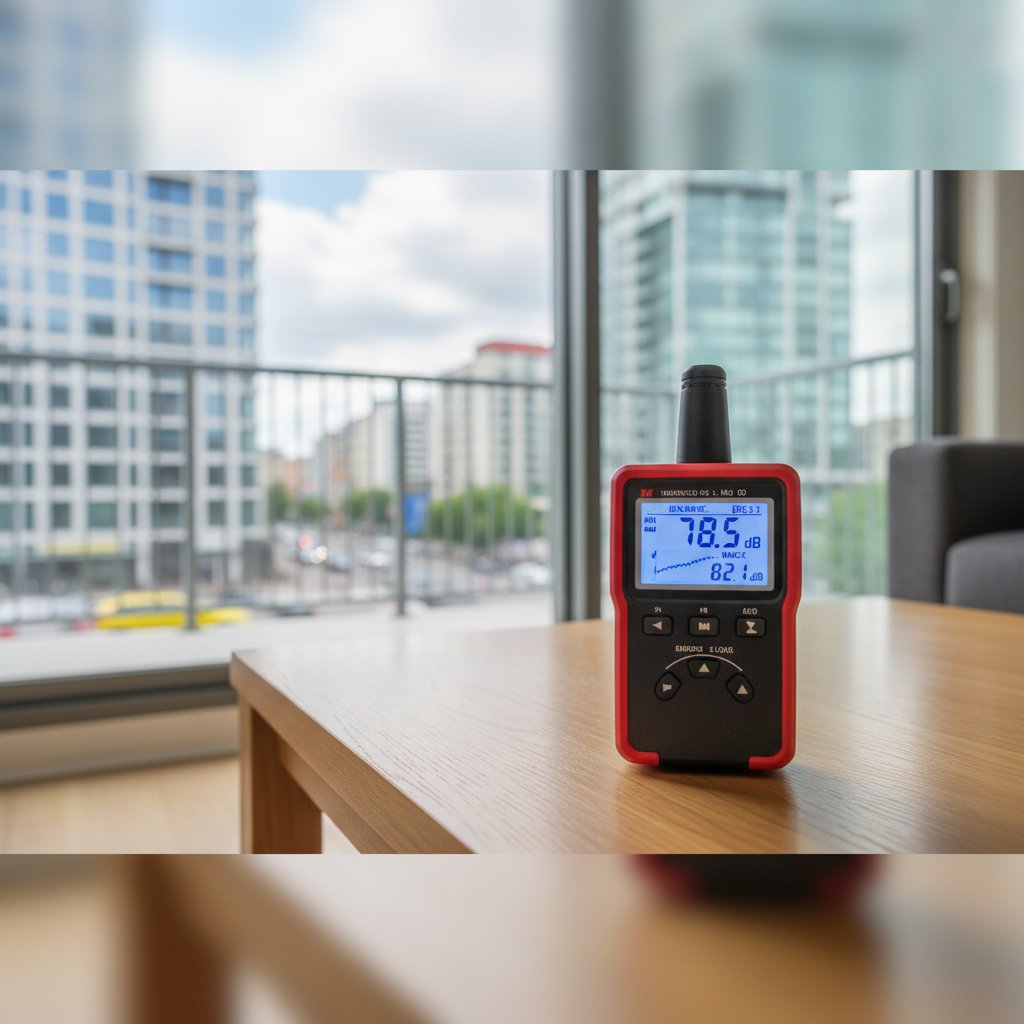
Download a sound meter app or buy a basic decibel meter for $25. Document your noise levels at different times. Is it bass-heavy music? High-frequency voices? Footsteps from above?
Low-frequency sounds (below 250 Hz) need mass and airspace. High-frequency sounds need absorption and sealing. You can't solve both with the same approach.
Step 2: Seal Before You Build (Days 1-2)
Before you install a single panel, seal every gap with acoustic caulk. Electrical boxes get putty pads. Door bottoms get proper sweeps or automatic seals. This unglamorous work delivers 40-60% of your total improvement for about 15% of your budget.
Step 3: Build for Decoupling (Week 2-3)
Use resilient channels or staggered studs to break the vibration path. Leave a 25mm air gap minimum. Fill that gap with mineral wool (not fiberglass—mineral wool has better low-frequency absorption).
Add mass-loaded vinyl as your final barrier layer before drywall. A single layer of MLV at 2 pounds per square foot typically adds 5-8 dB reduction.
Step 4: Address Every Opening (Week 3-4)
Solid core doors with proper seals. Double-pane windows with laminated glass. HVAC ducts with internal lining and baffles. Each opening needs its own strategy—there's no universal fix.
The One Thing That Changes Everything
Start with realistic expectations based on physics, not marketing claims. A well-executed residential soundproofing project typically achieves 15-25 dB reduction. That cuts perceived loudness roughly in half to one-quarter.
It won't give you a recording studio. It won't create total silence. But it will make your neighbor's bass line feel like a distant rumble instead of a chest-thumping intrusion.
The difference between success and failure isn't spending more money. It's spending it on the unglamorous fundamentals that actually move the needle: proper sealing, strategic decoupling, and addressing every path sound can take.
Do that, and you'll join the 32% who actually get what they paid for.